Mental Health and Wellness
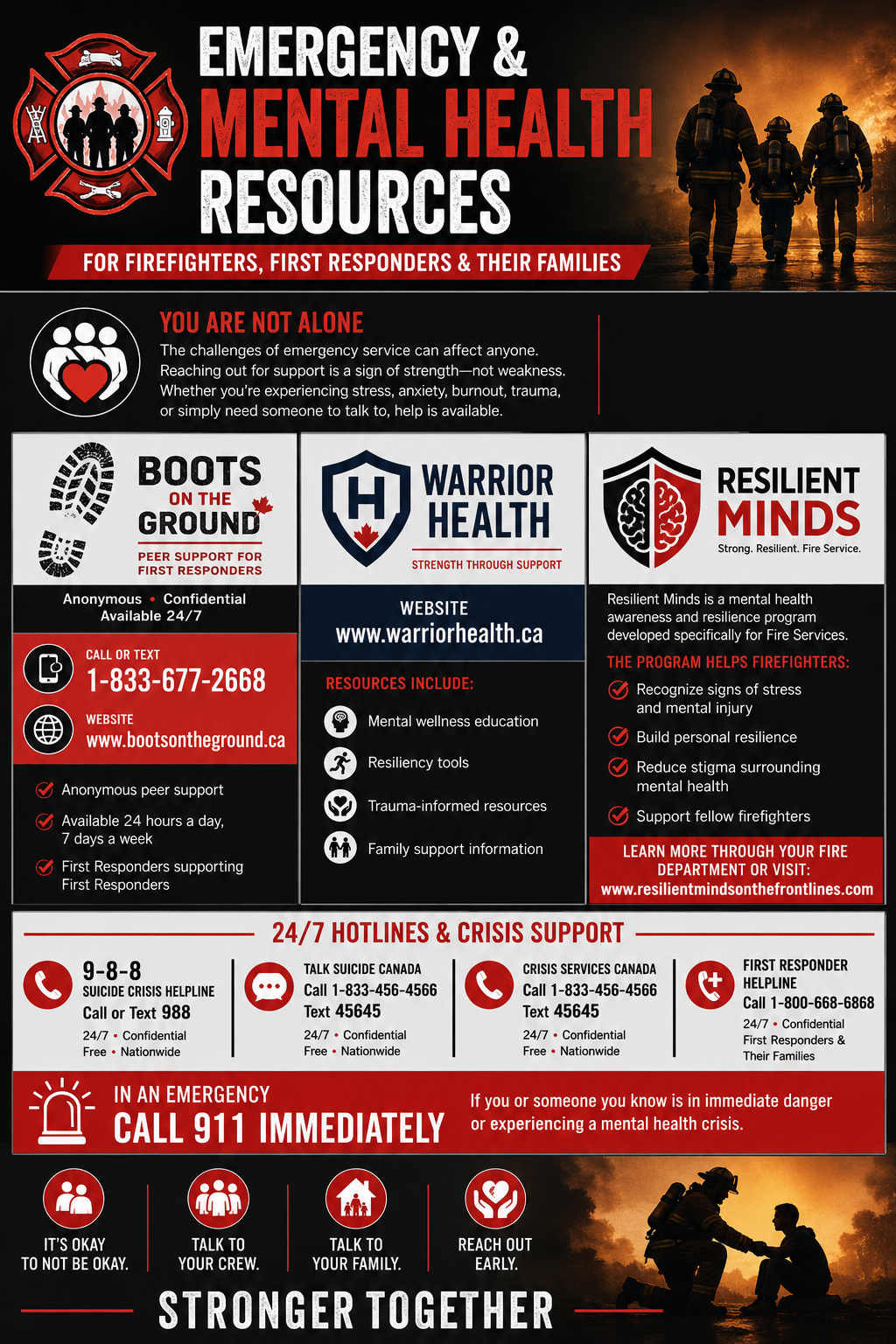
Firefighting can be mentally and emotionally taxing. In fact, due to the challenges of juggling multiple roles — including work, family, and fire service responsibilities — volunteer firefighting can sometimes feel more demanding than a full-time position. Therefore, supporting each other’s well-being is vital.
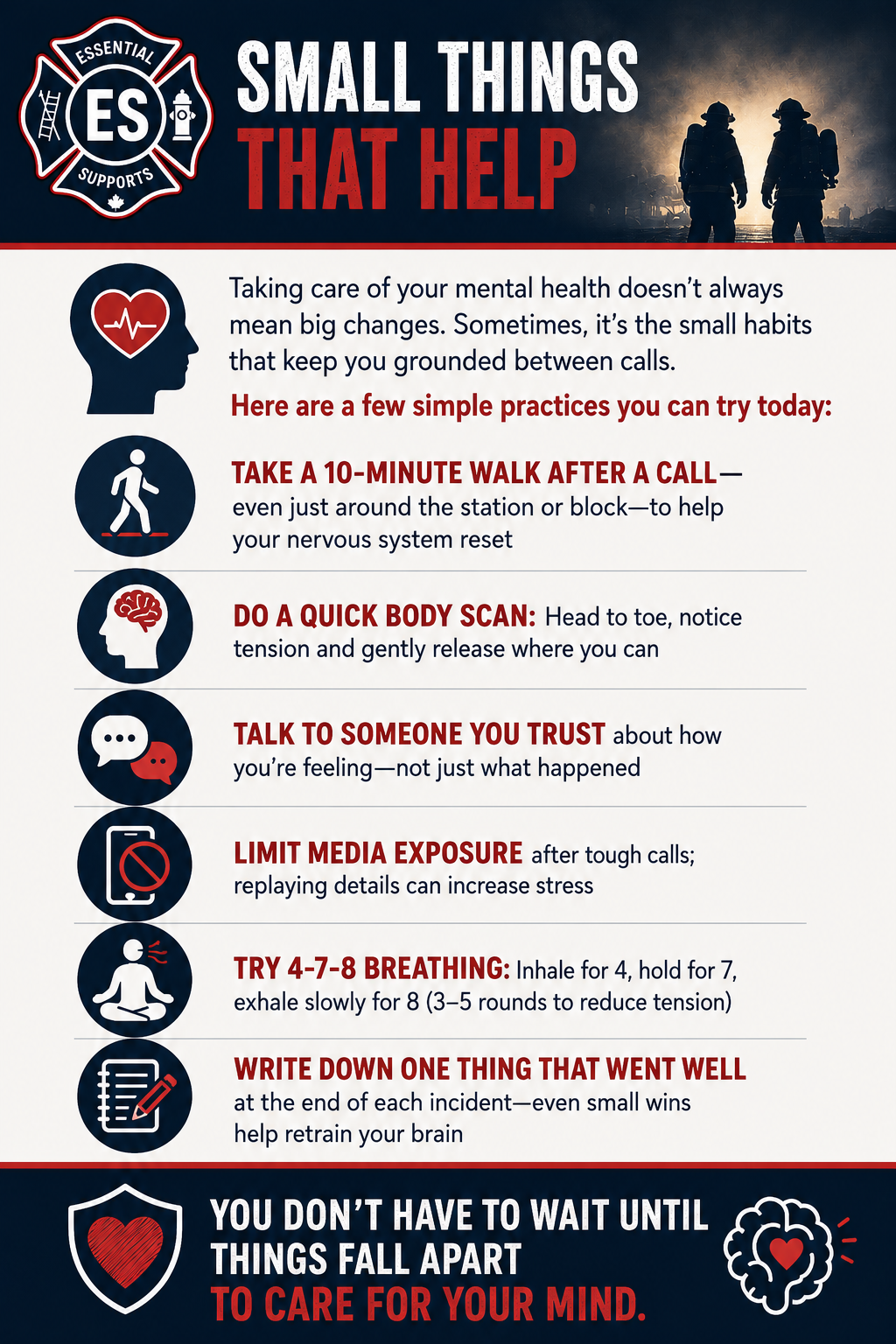
Creating small rituals or routines can help smooth the transition between responding to a call and returning to family or work life. This could be as simple as taking a few quiet minutes alone, changing clothes, or having a quick check-in with a partner. These moments help reset the nervous system and signal to the mind and body that you're moving from emergency response back into daily life.
Strategies:
- Allow for post-call decompression time
- Create space to talk about difficult calls when ready. If discussing with family members, avoid sharing graphic or detailed content. Instead, talk about the emotional impact in general terms—such as saying it was a difficult day—and communicate what support or space you might need in that moment.
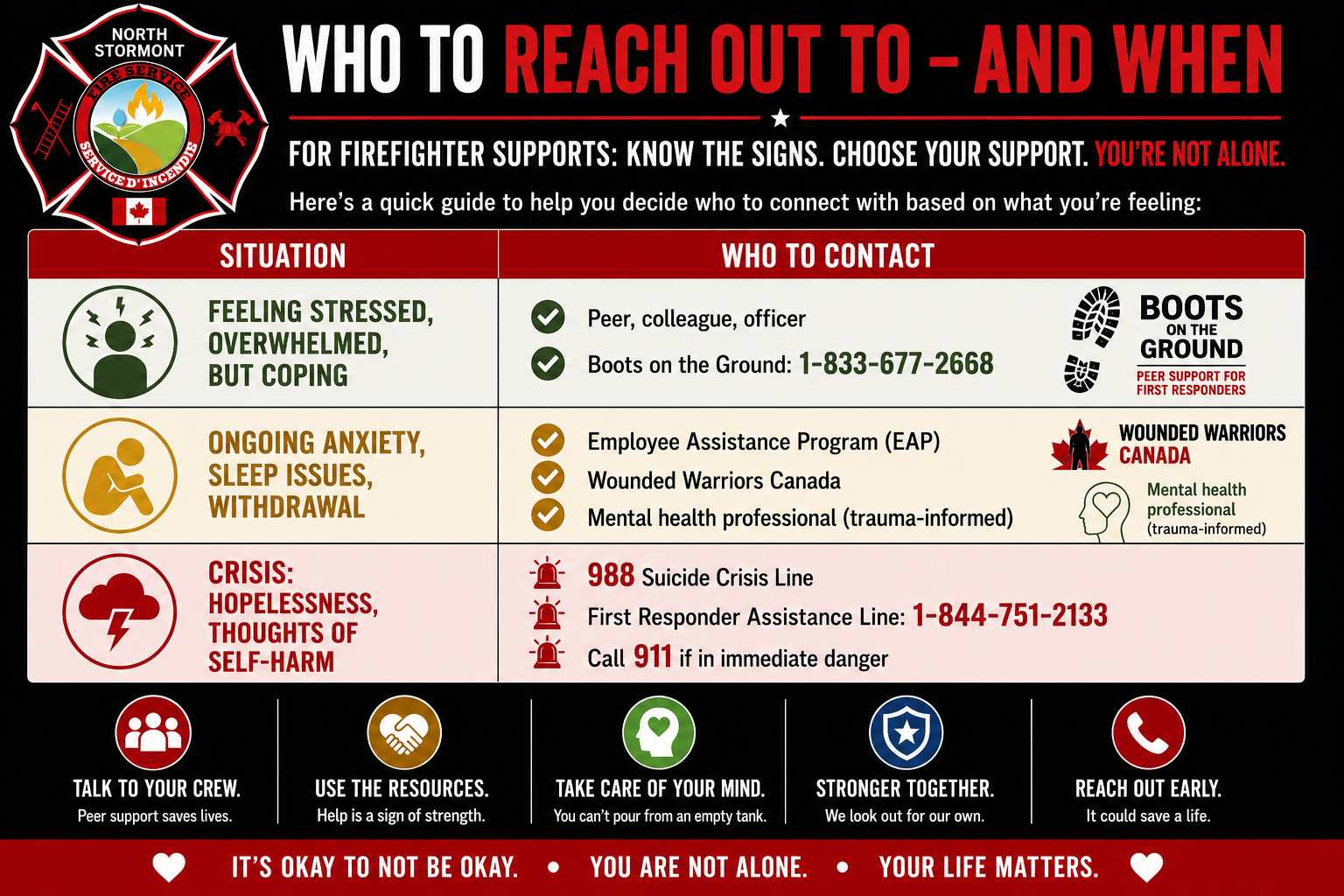
- Watch for signs of stress or burnout (in both the firefighter and family), such as irritability, withdrawal, trouble sleeping, feeling overwhelmed, or loss of interest in usual activities
- Prioritize rest, nutrition, physical activity, and connection
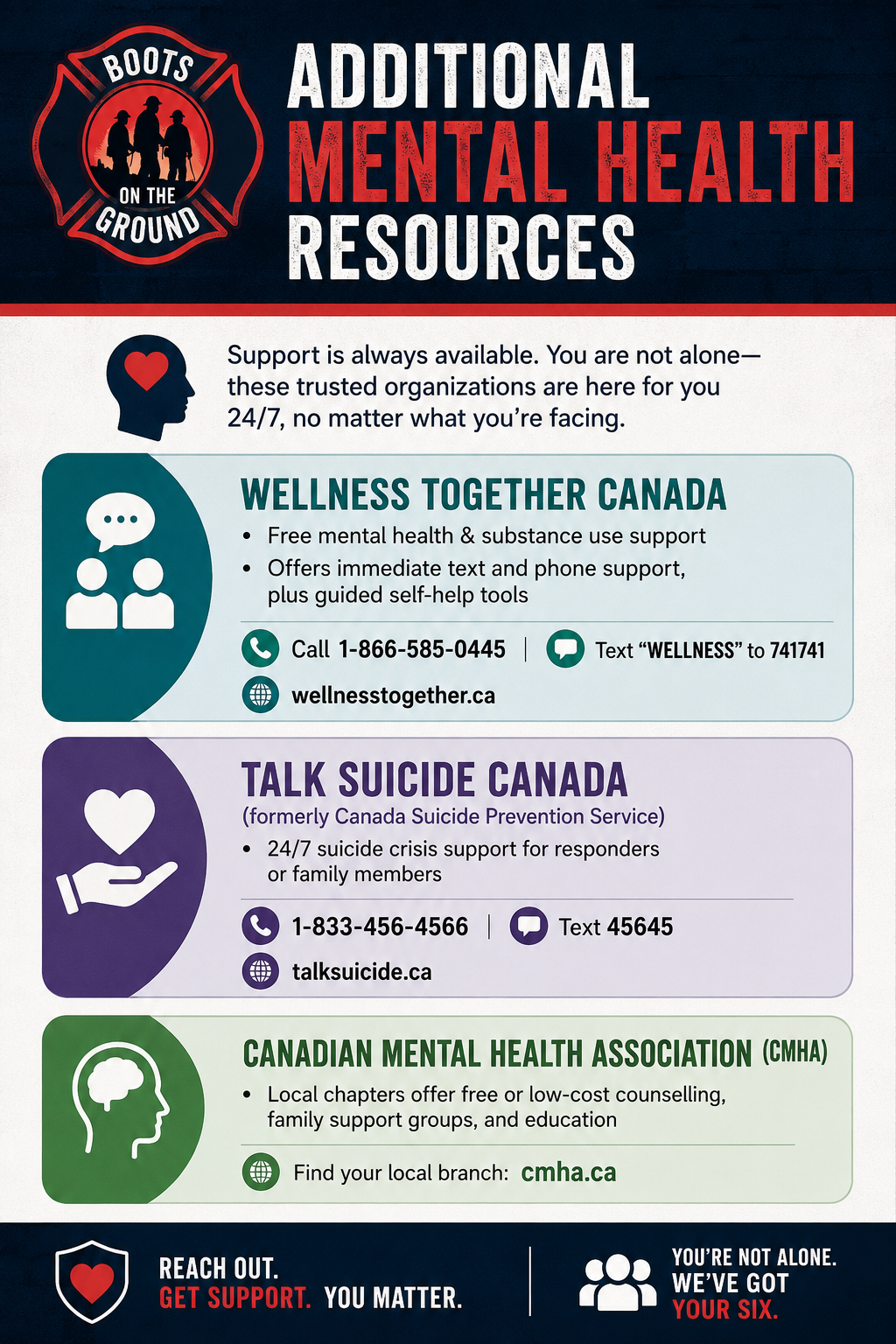
- Encourage professional support if needed (e.g., peer support, counseling)
Mental health is a family matter. Staying connected and supportive helps everyone stay strong.